Overview
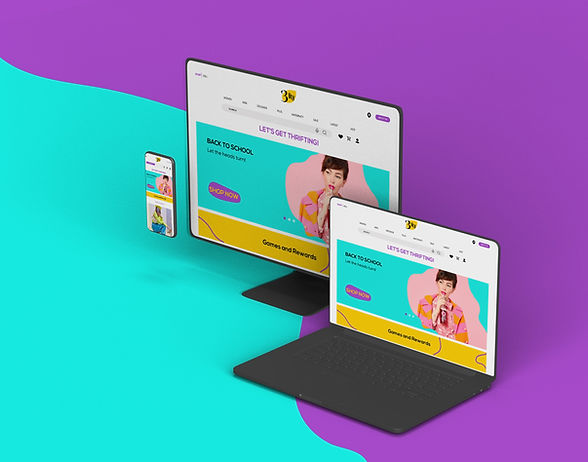
3fty is a thrift clothing platform dedicated to buying and selling pre-owned clothing. It aims at making thrifting more easier and engaging for the customers. 3fty brings out the best of sustainable fashion and affordable solution for fashion lovers who want to reduce their environmental impact and contribute to a circular economy. 3fty provides a user-friendly and secure space for sellers to list their items and for buyers to discover unique, one-of-a-kind pieces finds. The platform is committed to reduce textile waste and promote sustainable fashion and donation drives, while providing enjoyable experience for its users. Whether you’re looking to sell or give away your gently used clothing or add new pieces to your wardrobe, 3fty is the one stop solution for everything thrifting.
MY ROLE
UI + UX
Visuals and logo
User Research
Persona
Usability study
Wireframing
Prototyping
TOOLS
Adobe XD, Adobe Illustrator, Adobe After effects
TIMELINE
December 2021 to January 2022
The challenge
Despite growing awareness and interest in sustainable fashion, the fast fashion industry continues to dominate the market, resulting in a significant negative impact on the environment. Given the fact fast fashion is much more affordable, it contributes to textile waste and pollution. Additionally, many people struggle to find cheap and unique clothing options, while others are looking for a way to declutter their closets and make some extra money.
A roadblock to a more sustainable and reasonably priced fashion sector is the absence of a trustworthy and user-friendly platform for buying and selling used garments. The lack of a specialised online platform for thrifting that satisfies the demands of both sellers and customers while also encouraging sustainable fashion practises is the real issue.
Althought there are some online thrift shopping platforms available, they’ve cluttered designs, inefficient systems for browsing through products, and not many features like filters, offers,etc. These sites are not inclusive of different locations for pickup or delivery. Most of them neither provide the option to sell via their platform nor help the users to donate their gently used apparel.
With the aim of promoting sustainablity, the logo resembles the shape of a golden leaf
The Goal
The goal is to create an online thrifting platform that provides a reliable and lively thrifting experience through 3fty website and reach out to a larger audience.The platform should also promote sustainable fashion practices and educate about the benefits of buying and selling second-hand clothing. The platform will promote affordable and unique clothing options for everyone while contributing to reduce the environmental impact of the fashion industry.
Design Process
EMPATHIZE
DEFINE
IDEATE
DESIGN
TEST
REFLECT
-
Challenge
-
Goal
-
Target audience
-
Pain points
-
Personas
-
Problem statements
-
User journey maps
-
Sitemap
-
User flows
-
Sketches
-
Paper wireframes
-
Digital wirefram
-
Prototype
-
Usability studies
-
Findings
User Research
The typical user is between 18-30 years old, and most users are college students or early career professionals. After conducting interviews and making empathy maps, I discovered that unlike most of mainstream shopping websites, thrift shopping website are not that popular. One of the reasons for it could be the vast gap among their platform experiences. Thrifting sites lack filters, sorting, comparing, selling, etc, vital features that are present in their counterpart. And the awareness of positive impact of thrifting on the environment is not very widespread. Thus, making these sites less popular
OLD
IS
GOLD
Common reasons to why thrifting in general is not so popular:
-
Stigma: There may be a stigma associated with wearing second-hand clothing that some people find off-putting, and they may be hesitant to purchase used clothing.
-
Lack of awareness: Many people may not be aware that thrifting is an option for finding affordable and unique clothing.
-
Limited options: Some people may have a perception that thrift stores only offer outdated and worn-out clothing, and therefore may not consider them as an option.
-
Marketing: Thrifting websites may not have as much marketing and advertising budget as larger retailers, making it difficult to reach a wider audience.
-
User Experience: Some thrift websites may have a poor user experience which can lead to low engagement and adoption.
Existing Solutions

Competitive Audit
Platform
USP
Downside
Thredup
Kiabza
Poshmark
Website, App
-
Provides the option to both buy and sell
-
Engaging user experience
-
Affordable
-
Small collection
-
Limited to USA only
-
Doesn't show buyer reviews
Website
-
Provides lots of options to choose
-
Affordable
-
The user experience isn't very interesting
-
Very limited stock
-
Items for advertised/ photographed well
Website, App
-
Users can both buy and sell online
-
Discouted branded items
-
Thrifting not limited to clothing only
-
Has a community
-
Cost is higher compared to other thrifting sites
-
Limited collection
Pain Points
Navigation
Shopping website
designs are often
busy, which results in
confusing navigation
Experience
Vital features in the
shopping tab are often missing
Experience
Option to sell is not
available
Experience
Thrifting sites don’t talk about the benefits of
thrifting and its impact
Persona

User Journey

Information Architecture

Paper Wireframes


Wireframes
Usability study
Study type
Unmoderated usability study
Location
India, Remote
Participants
10 participants of
varied age groups
Length
10-15 mins
Getting feedbacks based on the behavioural and spoken response to the pre-made questionaire :
-
Following the creation of lo-fi wireframes, I developed a prototype and conducted tests with multiple users. To conduct the research, I outlined the research goals, compiled a list of questions to ask, and composed a script for tasks to be completed.
-
Upon gathering feedback from the users, I constructed an affinity diagram to identify commonalities in their actions and frustrations as they interacted with the prototype.
Findings
-
Once at the checkout screen, users didn’t have a way to edit the quantity of items in the cart.
-
Track order after purchase was missing
-
There was no option to add coupons.
-
There was no option to remove an item that are on your
seller list.
Design Guide
Typeface
Colour
Illustrations

Final Screens

Seller side

Responsive Design
In my mockups, I incorporated adjustments for multiple screen sizes, taking into account the wireframes I had created earlier. It is important to prioritize responsive UX design as it guarantees that digital products, such as websites and applications, are optimized for use across various devices and screen sizes.

Accessibility Considerations
I added the mic feature on the search tab, for those who rely on speech
The colours are well contrasted for easy reading
Accent colours are used to direct the smooth user journey
My Takeaway
This project was so fun for me to create! I was inspired all throughout the process to add onto as many tools possible to make the user experience memorable. 3fty serves as solution for those fashion lovers who have a wardrobe full of clothes but nothing to wear! Overall, thrifting is an important practice that can benefit both individuals and the environment.